
Bear Archery’s roots run 90 years deep, and through the test of time, it has always made everyone feel like they belong to the Bear family. Its annual bow lineups have long reflected that, with catalogs so broad that virtually any archer can find a bow model that fits their budget, style and needs. From a youth looking to get started with recreational archery to a hardcore bowhunter embarking on a once-in-a-lifetime sheep hunt, there’s a Bear bow for every archer and every adventure.
For this report, we’ll be focusing on the high-end of Bear’s 2026 bow roster, where we find the Redeem. It offers enough advancement to pique your customer’s curiosity and draw them into your test-firing lane, but it doesn’t veer from the proven technologies that we’ve seen on recent Bear flagship bows. As your customers shoot the Redeem alongside some of the other new-for-2026 high-end bows, here are some things they’ll notice.
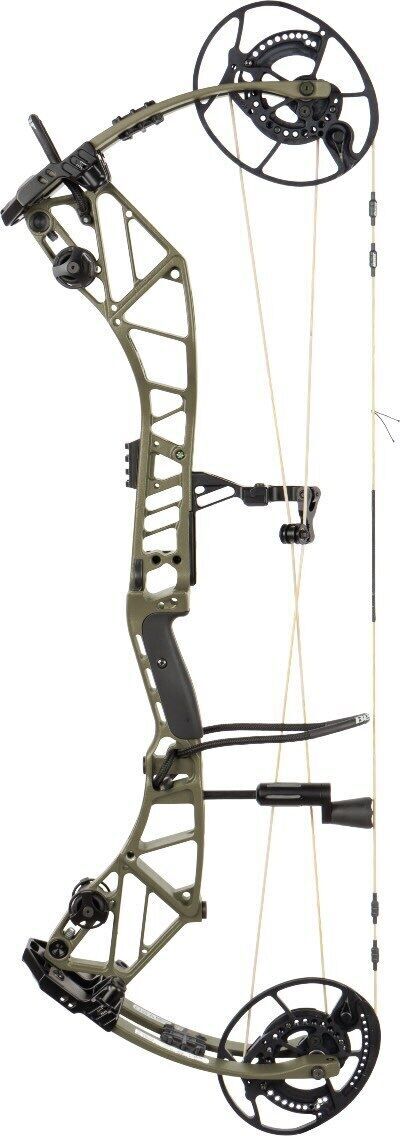
Sidebar: Test Bow Specs
- Axle-to-Axle Length: 30 inches
- Brace Height: 6.25 inches
- Draw Length: 28 inches
- Draw Weight: 71.5 pounds
- Let-off: 80-85% (tested at 80%)
- Bow-only Weight: 4.89 pounds
- Accessorized Total Weight: 5.8 pounds (including sight and rest)
- Velocity: 275 fps (with 468-grain Easton 6.5mm Acu-Carbon 340 arrow); 278 fps (with 456-grain CX Maxima Triad 350 arrow); 281 fps (with 441-grain Victory VAP SS 350 arrow); 299 fps (with 388-grain CX Predator 350 arrow)
- Kinetic Energy: 78.61 foot-pounds (Easton); 78.27 foot-pounds (CX); 77.34 foot-pounds (Victory); 77.04 foot-pounds (CX Predator)
- Test-Bow Finish: Olive
- MSRP: $1,299.99
- Contact: beararchery.com

What’s New?
Bow companies chase different things at different times. Over the 24 years I’ve been in the archery business, I’ve seen the pursuit of speed, smoothness, quietness, stability, balance, etc. For the last several years, many bow companies have focused on direct-mount accessories and user-friendly tuning features. Bear has had the first part of that equation handled for a while now, and the tunable Linear Tuning Roller has, in part, addressed the second part. But this year, the Redeem debuts a second tuning feature that truly enhances the bow’s tunability, putting it in the same class as the competition.
Tuning features typically involve the cam and cam axle, but Bear went with the limb pocket for its own unique rendition. The brand new pocket is equipped with four rocker adjustments, which adjust weight distribution on the limbs both vertically and laterally, in turn altering cam alignment in a user-friendly format, complete with reference marks to easily and accurately track adjustments. This is the Redeem’s pinnacle feature and reason enough to upgrade, especially for customers who love to tinker and tune, shoot fixed-blade broadheads, and shoot out to long range.

The Redeem also has a new cam system called the EKO 2 Cam. It offers greater adjustability than the predecessor EKO Cam, with adjustability from 25 to 30 inches. Additionally, all the draw-length module hardware and reference marks are located on one side of the cam and clearly labeled, streamlining the adjustment process. Additionally, the let-off is adjustable between 80 and 85 percent.

Compared to the Bear Persist, the Redeem’s riser has been reconfigured. It flaunts an attractive design that produces benchmark strength for those rugged backcountry outings, and stability and balance to smooth out the aiming experience. That’s what’s new, and now we’ll run through some Bear mainstays that are back on the Redeem.
The Tried and True
Bear Archery does a great job tricking out its high-end bows with purposeful details. It all begins with silencing features. In-Riser Dampeners located near the limb pockets minimize limb-generated vibrations as they transfer to the riser. A bowstring cushion located beneath the grip stops oscillation and tames vibrations. And limb dampeners quiet the bow down, too.
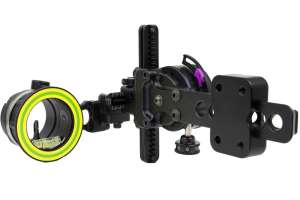
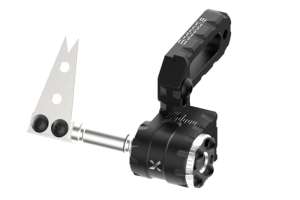
Users can outfit the Redeem with their favorite bowsight, whether it be a conventional or direct-mount option via the Integrated Sight Rail. The riser is also compatible with IMS or conventional rests. By the way, Trophy Ridge has some killer accessories that adapt to these mounting systems. Also built into the riser is Align Lock Technology, a bubble level that is beneficial when setting up a sight’s 2nd- and 3rd-axis adjustments.
The integrated Pull-Up Rope Loop is back, allowing seamless bow-rope attachment when treestand hunting. This offers a silent connection — no need to tie your rope around the limbs or cam. It’s a little detail that smooths out the deer hunting experience. Even the wrist sling is basically built in, feeding through the riser beneath the grip, and adjustable via a set screw in the back of the riser.
Speaking of the grip, the Bear Paw grip is constructed of a composite material; it’s comfortable and serves as a comfy barrier between the shooter’s hand and the riser on cold outings. It offers just enough tackiness to provide traction, but isn’t so grippy that it invites torque. The grip is also removable, should the user opt for grip tape or another alternative.
I noticed that the Silent Shelf was removed and replaced with a rubbery strip where an arrow shaft will make contact. If you read my Persist and Persist 33 reports, you might recall that I called the Silent Shelf a good idea with the wrong type of silencing material. Arrow contact was only minimally decreased. Anyway, Bear replaced it with this new rubber strip, which is a better material for the job.
The Linear Tuning Roller (LTR), mentioned earlier, provides tuning of the cable load and vane-clearance adjustability, but it also reduces draw-cycle friction. Integrated reference marks provide a gauge for users and bow technicians to track adjustments, which is nice, too.

On the Range
I didn’t have the luxury of shooting the Redeem beside the Persist, but to me, the EKO 2 Cam’s draw cycle feels very similar to my recollection of the EKO Cam. It’s a very easy draw cycle to get acclimated to. It starts maybe just a bit harder than some cams, but transitions to buttery smoothness that rolls over subtly and hits a brick wall at full draw. The draw cycle feels just right, and it lets down smoothly, too. And again, the let-off can convert between 80 and 85 percent, which will appeal to more archers.
Velocity-wise, the Redeem is similar to most flagship bows. In my tests, with a 441-grain hunting arrow, 71.5-pound draw weight, and 28-inch draw length, it shoots 281 fps, yielding 77.34 foot-pounds of kinetic energy — plenty of oomph for any North American species.
This is the third consecutive Bear flagship bow I’ve tested, and I can’t say enough about how easily they sight in. I was dialed at 20 yards in minutes and banging arrows together at 40 yards in the wind, less than 10 minutes later. Now, I didn’t install a stabilizer on the Redeem. It felt so good when I was setting up the arrow rest and peep sight that I decided it didn’t need one, at least for my test.
I’d say this is one of the most stable bows in its axle-to-axle length class. Even in the wind, it held like a champ, and steadiness is an attribute that directly impacts accuracy, especially for bowhunters under the influence of adrenaline. Speaking of accuracy, achieving golfball-sized groups at 40 yards was nearly effortless for me. The bow is flat-out comfortable to handle and shoot, and it puts my arrows where I aim. Period.
One more thing, the Headhunter Contraband string and cables gave me no troubles at all, and the peep orientation remained true.
A Few More Things
The Persist 33 I tested last year included two grips, but I didn’t find a second grip in the Redeem’s box. I personally find the standard grip a little bit too bulky for my hand, though that didn’t inhibit my accuracy. Anyway, I prefer the lower-wrist grip option that was included with the Persist 33, so I was missing it during this test.
Another minor complaint: Despite the silencing and dampening details, the bow has a little bit of buzz in the grip and twang in the bowstring. Perhaps installing a stabilizer would soak up the riser vibrations, and I believe some add-on bowstring silencers would kill the noise. Some companies send out their bows standard with string silencers, and some don’t. I’d like to see Bear include them next year on its 2027 model, but for now, it makes a no-brainer add-on sale for you, the dealer.
This isn’t a complaint because I truly don’t mind a heavy bow, but it’s worth noting that the Redeem is considerably heavier than many of the market’s competing flagship bows. Largely, this is due to machined-aluminum riser construction, whereas a lot of manufacturers have transitioned to magnesium. Many flagships are around or just below 4 pounds (bare bow), but the Redeem is just a smidge under 5 pounds.
In summary, the Bear Redeem has many similarities to the Persist, but with the monumental advancement of the new tunable limb pocket, the new EKO 2 Cam, and a redesigned riser. If that doesn’t coax your customer into buying the Redeem, perhaps the included three-month subscription to onX Hunt will.
Additional Notes: The Bear Redeem was set up using a Last Chance Archery EZ Green Bow Press and EZ Green Bow Vise, and the draw weight was calculated using Last Chance Archery’s Digital Bow Scale. A Caldwell Ballistic Precision Chronograph measured the arrow velocities. Other products used were Easton’s Nock and D-Loop Pliers and Pro Hex Fold-Up Allen Set. Arrows were weighed on Last Chance Archery’s Pro Grain Scale.
In-the-field images by Becca McDougal