
It can seem like the one constant in running a profitable archery pro shop is change, and the best are almost always up to the challenge. Part of that is determining and ordering the year’s most exciting new bows and accessories as early as possible, programmed to arrive when it makes most sense. Another component is coming to grips with how the widespread popularity of crossbows has shifted the peak archery sales season much later into the year. These days, as many shops have seen, the more traditional July-through-September timeframe has been extended right on through October and well into November.
Thankfully, when it comes to making the most of peak archery sales season, a few hard-and-fast rules never seem to go out of style. Consistently, the best shops do their gear-stocking homework, have a few trusted distributors on speed dial as backup, and create a strong strategic teamwork plan for employees when the shop gets crazy and lines begin to form.
To get some of the details on how this all comes together, we spoke in late March with a few upper-Midwest shop managers who were keenly aware of the challenges posed by their upcoming peak sales seasons.
A Northcountry Perspective
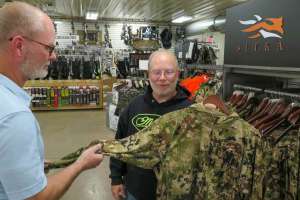
“Our peak sales season has definitely moved, with crossbows a big part of that,” said Brian Waldvogel, 42, manager of J’s Archery in Antigo, Wisconsin. “I started full time in 2010, and back then, you’d get one cooler evening around July 4 and people would start filing in, and by early August the switch was flipped. Back then things slowed down into an October lull, we’d get a little increase in November, Christmas would bring some business, and then tax [return] season.
“Now, with crossbows being legal in archery deer season [since 2014], when the deer season starts [in mid September], it’s absolutely crazy — and October and November are just insane. A lot of that is crossbow sales and maintenance.”
Waldvogel said most of his shop’s vertical bow sales occur during winter and spring.
“In winter we’re selling 10 vertical bows to one crossbow, and in late August, it flips.”
Waldvogel said his shop’s peak sales season for all its gear runs mid August through mid November, and when we spoke in late March he was proud of the fact that some of his early buying strategies, including at the 2026 ATA Show, were already paying off nicely. Waldvogel said he’s noticed a trend for his customers to purchase “custom” bow colors, and because there is often a substantial wait associated with those orders, he made the decision to stock several custom limb/riser color combos of his own choosing. Because those combinations can be almost endless there is some risk involved, but he’s noticed a positive response to the custom colors he’s brought in.
“It seems like a lot of guys want the custom-order stuff, but don’t want the three-month lead times. But once we put them on the shelf, they don't last long. Everybody seems to want something unique and different looking. Doing the custom stuff has been a big plus for us; I’m trying to stay on top of ordering that kind of stuff, trying to be a little more proactive.”
Waldvogel said his shop currently does good business with custom bow colors for a variety of companies that include an option for Mossy Oak Bottomlands camo — typically camo limbs with a solid color riser. His shop’s hottest solid risers, in order of current popularity, include OD green, flat dark tan, and gray, with black risers also a consistent popular seller.
Regarding other 2026 bow trends, Waldvogel said he’s noticed a recent uptick in Bowtech sales, as well as Darton.
“A lot more guys are waking up to Darton, people are starting to realize they are for real. And our sales are really good there. It’s to a point where guys are asking to shoot the Dartons, whereas before it was us saying, “Hey guys, you should really shoot this, you will be surprised.”
Waldvogel said he’s also going to use the months before peak season to be more proactive with prepping for programmed orders that will arrive later in the summer. He wants to get his POS system loaded with new-gear SKUs to avoid “selling out of the box” when peak season hits. That’s occurred in the past when he couldn’t make time to enter new SKUs. Lesson learned.

Staffing Challenges
Staffing is a continual challenge for most shops during peak sales season, and Waldvogel said J’s Archery is no exception.
“I don't bring on too many extra guys through the peak season. I don't have seasonal guys, we have two full-time and two part-time employees, and we have people help us here and there.
“I work a lot, and last year it got to the point where I started to just sleep at the shop. I don't have an obligation to be at home sometimes, so I’ll just stay for a couple days and work.”
Waldvogel said he’s excited about the prospect of a family member who is interested in helping out during the 2026 peak season by working the register.
“We’ve never had a designated person on the register, I mostly run it myself. And I know we’ve lost some soft-good sales because we were so busy. If a guy just wants a pack of broadheads but he’ll have to wait an hour, what do you think is going to happen? Those dollars add up.”
Workflow Is Critical
Another area of concern for J’s Archery is maximum tech-service and bow sales efficiency during peak sales season, which Waldvogel said is currently a work in progress he hopes to have resolved before the rush hits.
“If a guy comes in to buy a bow, I’m trying to push for one employee to be designated for that bow purchase,” Waldvogel said. “The other employees are then going to take care of the questions and the quick purchases. I really pushed for that last year, and this year, I’d like to set a lot more [bow set up] appointments. This year if you want one-on-one time, we will try to set up appointments during the week, and charge a little something for that. Probably $50 for an hour.
“It’s just to kind of balance everything out for the consumer. Personally, I’m always looking at it from the customer’s point of view, what they’re thinking, and how we can make things better for them. Ten years ago, if a customer brought in their bow, they wanted to leave with it. Now, we want people to leave their bows for service. We want to keep the flow going, and I’m very conscious of that.
“I try to designate times during the day where employees are strictly working on service. One guy is doing only that single job. I’ll tell him, just work on this, don't worry about what’s coming in the door. Then he has no interruptions, no distractions. For me, that happens only after hours, and when I stay late, I get a lot of stuff done.”

A Big-City Perspective
Although J’s Archery is a rural-based northern Wisconsin shop, many of the same peak season-sales challenges are found at the much more urban Bwana Archery based in Little Canada, Minnesota — part of the sprawling Twin Cities metro area that holds a population of about 3.8 million.
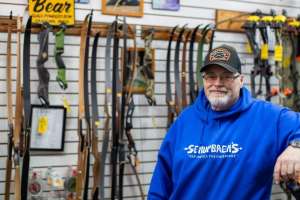
“Our peak sales season has changed a little bit, it’s more spread out than in years past,” said Andy Larson, 39, president/manager of Bwana Archery. “Typically, the 4th of July weekend is what I consider the start, and it runs basically to mid-November.”
Larson, a third-generation manager for the 51-year-old shop, says his prep for peak season starts during winter.
“For me it really starts in January, with attending the ARRO Show, and the ATA Show. Those shows are setting your table for your upcoming peak season. You’re trying to tell the future about what products are going to be important, or creating safety nets that you can fall back on, in case you under-ordered a product. If that happens, maybe you can manipulate your next order to make up for that shortcoming, or maybe trim it down a little bit.
“By setting up multiple ship dates, you can manipulate or cancel some of those later shipments; it kinds of boils down to being smart with your money, smart with your orders. At the end of the day, you are trying to tell the future, so there is a fair amount of guessing going on.”
Early on in the year, Larson keeps an eye trained on his shop’s hot sellers, because those are sure to sell even more later on. He also takes clues from early underperformers.
“If it’s selling early, it’s going to sell great during peak season, too, and maybe some of the stuff that is selling slow you can do more advertising on to get it in front of more eyes.”
Overall though, Larson said his shop struggles a bit with advertising.
“It’s one of our shortcomings. Advertising is expensive, and we try to change it up from year to year. It all depends on the year, what money we have available; we don’t have a strict advertising budget. We’ll use Outdoor News (a local outdoor newspaper) ads, or maintain our staff shooter presence; getting our shooters to the tournaments wearing our logos on their shirts, that sort of thing. We’re not really in an industry where you can run TV ads 50 times, you kind of have to be strategic with it.
“We’re trying to move more into an Internet presence, we do social media — Instagram, Facebook and Tic Tok. I don’t think we really enjoy being in front of the cameras, but we try to do some of that, and it’s definitely something I key on, something we’re trying to get more into. Between myself and the part-time guys, we usually can piece something together.
“There’s definitely more archers now in that space; now we’re getting a lot of 17- to 24-year-old archers posting, so it’s important to have some exposure there.
“We still think of ourselves as a small archery-only pro shop; there’s definitely some bigger ones where advertising becomes more important. But being in business for 51 years certainly helps. I’m the third generation working here, and we have second-, third-, and fourth-generation customers who come in because their grandpa did. That’s definitely a huge benefit.”
Pre-Season Meetings Can Help
Once customers are through the door at peak time, Larson said shop efficiency is mandatory. That process was set to begin soon after I spoke with Larson in late March; he said one or two meetings with staff members were about to be held to go over the shop’s last peak-season performance, with input from everyone involved. Bwana uses three full-time and three part-time employees, and also makes use of its shooting staff members during peak season during the final steps to bow sales.
“My prostaff guys are a lot of tournament shooters, shop regulars, some have been around for a while. When things get really busy, we tend to utilize them for the ‘post bow setup’ — working with customers on the range to fine-tune their anchor point, getting some shooting form stuff worked out so they’re not losing arrows on an outdoor range. It’s kind of like the final polish, if you will. We try to do our part to get customers off on the right foot. Our pro staff does that for free shooting time, some equipment discounts — some will do that for tournament entry fees.
Assessing Tech Work
When it comes to peak season “go time,” the Bwana staff led by Larson will quickly triage customers packing bows needing work. Some will be serviced, most will be asked to leave them.
“It's a bit of a case-by-case basis, but once we get into peak season, we’re much more prone to have them leave the bow, especially if it requires tuning because it just slows everything down. Peep and draw length adjustments, bowsight replacements, all that can be done while the customer waits.
“I do a lot of jumping into stuff that one of my guys is a little slower at, and I’m usually trying to get the proper people matched with the best jobs for their skillset — while usually juggling setting up a bow myself. You’ve got to wear a lot of hats during peak time.
“Streamlining those jobs are some of the things we’ll talk about in our pre-season staff meetings. Everybody has their strengths, and it’s all about mitigating the weaknesses. Some guys are a lot quicker at bow set ups, some are a lot more personable, they’ll work with the customer to get the peep sight just where they want it, and give them some quick shooting form instruction. Some can work really well behind the counter.
“In the end, a well-run archery pro shop turns into a big family dynamic, with everybody helping each other out — at least that’s the vibe I go for. It keeps it fun. Our pro staff members typically drive together to archery shoots, they split hotel rooms, they hunt together; all that fun stuff.”
That type of camaraderie throughout his staff pays big dividends when things get challenging during peak sales season, Larson said, because it will. “Not everyone’s going to see eye to eye all the time, but everybody having respect for each other, at the end of the day, keeps everything running smoothly.”
Sidebar: Should Your Store Offer Layaway?
Many archers know that a good part of the excitement of a new year and new season is all the cool new gear that comes along with it. And that’s why Minnesota’s Bwana Archery helps its customers scratch that itch with its long-successful layaway program. If your shop is looking for a way to increase peak-season sales, this type of program might be a wise addition.
Bwana Archery manager Andy Larson says his shop’s layaway program requires a down payment of a quarter of the total bow purchase price, along with monthly payments. Also, the bow (or bow plus accessories) in question should be paid off within a year of purchase — depending on the specific customer and their history.
“As of right now, we don't have a minimum monthly payment requirement. As long as you’re continuing to pursue the purchase is the main thing; [we understand that] sometimes a bow payment has to take a back seat to replacing a blown home water heater, or an unexpected car repair.
“Sometimes our layaway program is the difference between a customer buying a mid-line and a high-end bow; but overall, I think it enables more people to be able to get into the sport,” Larson continued. “We do layaways on everything from $450 Bear bows to full premium hunting rigs complete with accessories, and it's a couple grand for some of those. Customers with all types of budgets seem to utilize it.”
Interestingly, Bwana’s layaway program kicks into high gear early. Larson said a good number of Bwana’s winter league members who like to buy the latest-and-greatest flagship compounds take advantage of it when leagues begin in December and run till early April. As noted, Bwana’s leagues begin soon after the introduction of most companies’ new flagship models in late fall, so the timing is good. Bwana’s layaway program requires the bow to remain in the shop until it is paid in full, but customers utilizing the program can shoot the bow in the shop leagues, while paying regular shooting rates.
One challenge of a successful layaway program? Storing all the layaway bows. Larson said things can definitely get “tight” in the back room of his shop during the preseason of a good layaway year.