
The web is littered with quotes about work. I recently did a Google search, and two quotes stood out but offered opposing ideas. Winston Churchill said, “If you find a job you love, you’ll never work again.” The fundamental concept is that getting paid to do something you love doesn’t feel like work at all. In my dealings and conversations with dozens of people from all walks of life, I’ve heard this quote and a similar one countless times.
Now, for the second quote by Jeff Bennett. He said, “Sometimes when you turn a hobby into a job, it becomes work.” Here, the gist is that your joy and passion for the hobby might dwindle when it becomes your daily routine; something you have to do, not something you choose to do at will.
Hopefully, you can relate to Churchill’s words, and you genuinely love working in archery retail. Even so, be aware that without some safeguards in place, burnout can creep in little by little until one day you can’t fathom turning on the open sign. Inevitably, some dealers who are reading this have already hit that point and now resent the career they once loved. Others are in the burnout funnel and beginning to lose their taste for the business.
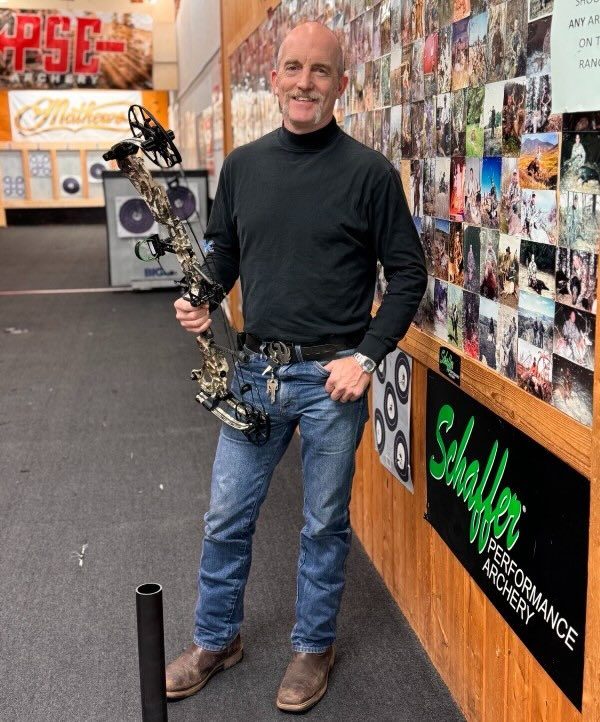
Recently, I sat down with longtime archery retailer John Schaffer of Schaffer Performance Archery in Burnsville, Minnesota. He has more than 30 years of archery retailing under his belt, and he’s seen and experienced a lot. His input is the centerpiece for this article, and whatever camp you’re in — loving the business, losing your zest for it or hating it — you’ll find some valuable tidbits in the following paragraphs. Come along!
Create a Team
Most archery retailers start small, and those early years can at times feel daunting. That’s exactly how it was for John Schaffer.
“When I first opened the shop, I was a one-man show,” Schaffer explained. “There’s only so much you can do on your own. I was working 70-80 hours a week. I was just killing myself trying to keep everyone happy. Was I burnt out? I don’t think that’s the right word for it. Overwhelmed is a better word. I remember shutting the doors at night and thinking, I don’t know if I can do this again tomorrow. But I learned how to get the numbers right so I could afford to bring in an employee, and when I did, it took a lot of pressure off.
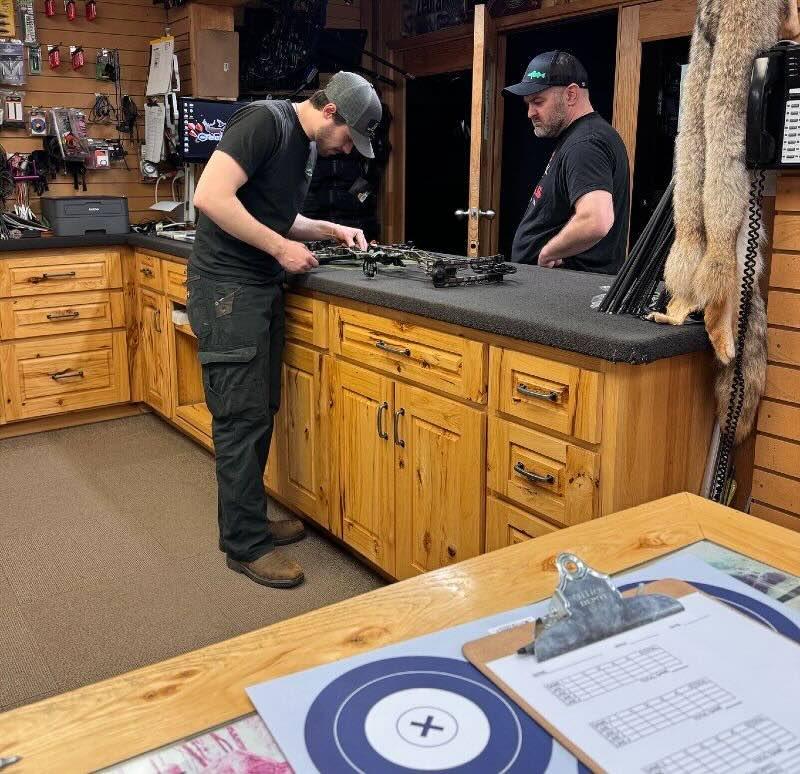
“When a shop reaches the level where it can support employees, that becomes a tremendous benefit. We have some full-time employees on the team here at Schaffer Performance Archery. I don’t want my employees burning out by being stuck on a single task for too long, so we rotate in and out of the floor. Bouncing between servicing bows, fletching arrows, assisting customers, and selling bows keeps the work atmosphere fresh for everyone and fosters positive attitudes. That strategy has been very successful; most of my employees have been with me for decades.”
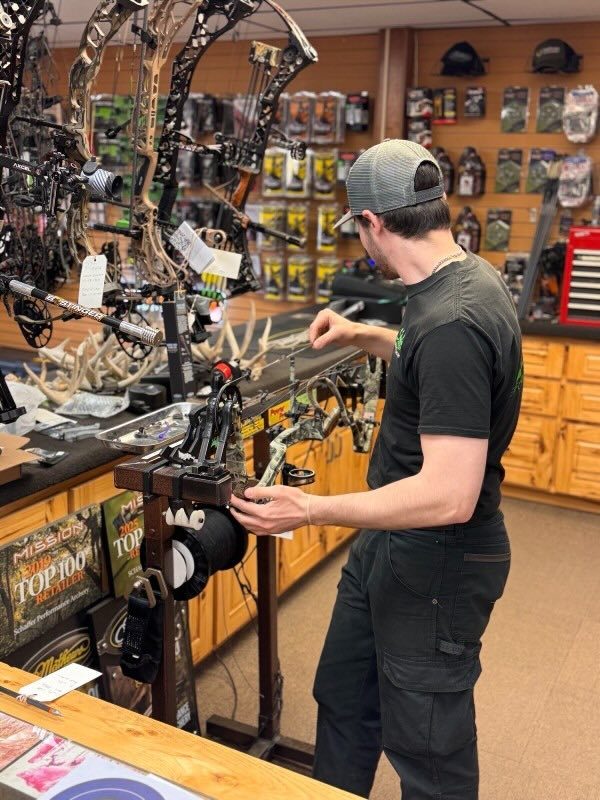
Schaffer also said that it has been important to have realistic expectations as to how much employees can work. “I intentionally give my employees easy schedules,” he explained. “They work 40-hour weeks and always get two days off each week. And that schedule perpetuates year-round. I’ve heard stories of other shop owners hiring full-time employees and putting them on for 70 hours a week during the busy season. I put in hours like that, but I don’t subject any of my employees to ridiculous hours like those. You have to remember that your employees are employees, not owners. If you make them work that much, you’re just going to wear them out.”
Attract the Right Customers
Being surrounded by the right people makes the work more fulfilling. That goes for your team and the customers you interact with.
“I always say that we have the best customers, and I’m sure the same is true of most pro shops,” Schaffer said. “Our customers are like-minded folks who are coming here to engage in something they truly enjoy. They’re not coming in because their car is broken. They’re coming in because this is their hobby or lifestyle. They love archery, and we love archery. We share a lot of commonalities with our customers, and that really makes doing business a lot more enjoyable. Ninety-nine percent of our interactions with customers are fantastic, and I genuinely enjoy the face-to-face interaction of selling more than anything.”
Although most interactions are pleasant, there is the occasional tough customer. People like that can drain your batteries if you allow them to. Or, you can approach the scenario in a more positive light and even find some satisfaction in working with tough-to-please customers.
“A few times a year, we get a customer who is unreasonable and tests everybody,” Schaffer said. “When I was younger, situations like those made me very angry, and I even lost sleep over them. Now I see customers like those as challenges. My employees know that when they encounter difficult customers, they’re to give the customer over to me. Again, I see it as a challenge, and I feel enjoyment when I win them over, calm them down, or whatever.
“Occasionally, there will be a customer who’s absolutely impossible to please, but in most cases, you just have to approach the situation with a positive mindset, and things will smooth out as you spend some time with that customer. And then you’re not mad and hating the job because you experience a win.”
Beyond the Transaction
Archery is a tight-knit community. Often, folks who engage in it have things in common, which is the perfect way to connect with your customers beyond the dollar signs — another way to enjoy rather than dread the job. Schaffer emphasized that building relationships with customers benefits everyone and makes the work more rewarding.
“My team and I really try to engage with the customer beyond the nuts and bolts of why they’re here,” Schaffer said. “Ask questions. Learn what they do for work. Ask about their family. Get to know your customers at a deeper level so you can interact with them as a friend, more so than merely a customer. As I said earlier, many of our customers are a lot like my team and me. We generally all get along and can be friends and hunting partners.”
Schaffer sees his pro shop as so much more than a retail store. “I don’t even really like being referred to as a retail store,” he said. “Buying and reselling equipment isn’t a big deal. Today, anybody can do that, with or without a storefront, and with or without relationships. Running a legitimate archery pro shop is a service and a people business. Archery consumers can buy equipment without leaving their homes. If you’re just in it to sell parts and think that’s all there is to the business, you’re probably not going to do very well or enjoy the work.
“You have to adopt a more macro view of what we do for a living. All the stuff we sell at Schaffer Archery can be ordered on a phone. Our customers come here because they’re looking for an experience and expertise. We want to make sure they’re having a good time and that we’re having a good time — a mutually beneficial business relationship. People don’t really remember a price, good or bad, high or low. But they will always remember how they felt and the experience they had.”
Charge What You’re Worth
Something that saps the enthusiasm of many retailers is being beaten down by struggling to make ends meet. Sure, some product categories have weak margins, but you have control over the pricing of your services. Failing to charge enough makes the work very unfulfilling.
“Because I’m also a manufacturer, I’ve talked with hundreds, if not thousands, of dealers over the years,” Schaffer said. “I’ve heard the same thing over and over: A lot of burnout in archery retail happens because a pro shop doesn’t charge enough for the services it provides. That used to be me. In the past, when a customer would bring in a bow and accessories they bought elsewhere, I was frustrated because I thought they should have purchased it from me. Eventually, I learned I could still make money on these customers, and then I wasn’t angry about it anymore. But a lot of shops keep seeing situations like these as headaches. They’re frustrated that the customer didn’t buy from them, and it’s a headache because they’re not charging enough money for setting up the equipment.
“When you charge service fees that make the job worth your time, it becomes a viable thing. You’re no longer ticked off, and the customer isn’t sensing that you’re ticked off. The customer gets a positive experience, and so do my employees and I. It does make a big difference.”
Find Satisfaction in What You Do
Truly enjoying a particular line of work requires seeing beyond the dollar signs. Yes, you have to make ends meet, but that can’t be your sole goal or you’ll almost surely burn out at some point. Adopt a business philosophy that focuses on things such as providing expert services, forming business relationships with your customers, providing solutions to problems, and immersing in the entire archery culture. Do that, and each workday will seem more purposeful and satisfying.
“If I were burnt out, I wouldn’t be doing this anymore,” Schaffer said. “I don’t need to be doing this anymore, but I still enjoy it. Would I enjoy being in the shop 70 hours a week and dealing with every single customer who walks through the door? Probably not. But I wouldn’t say I’m burnt out. I still find this work exciting. Upon completion of a workday when I feel like my team and I crushed it, I still find it fun and exhilarating.
“You know, philosophically, we as archery retailers have to continually remind ourselves how fortunate we are to do what we’re doing. We’re not digging ditches in the hot sun or on our hands and knees scrubbing floors. The reality is a lot of people would kill to do what we do. This is a small industry, and not very many people get to make a living doing what archery retailers do. We get to deal with some fun stuff that we’re really passionate about. When you’re going in and grinding day after day, it’s easy to lose that perspective. But even when we’re dealing with some difficult times, or we’re feeling a little down, we have to remember we’re making a living and have created a lifestyle that revolves around something we truly enjoy.”
Sidebar: Burnout Recovery
So what happens if you are burnt out or hit burnout someday? Over countless discussions with other dealers, John Schaffer said that store hours are a leading cause of burnout. Fortunately, this is reversible. If your store hours feel like a cycle that you’re trapped in and can’t get out of, adjust them.
“I’ve been hearing more often that stores are cutting back hours to find some sort of work-life balance,” Schaffer said. “Maybe they are closed Sundays and Mondays, or maybe they close at 5 or 6 p.m. on summer weekdays. Schaffer Archery has not done this and doesn’t need to because of how our employee schedules are structured to prevent burnout. But my friends in the business who have adjusted their store hours, even a little bit, have found that it has drastically changed their entire mindset about the business.”