
I’ll never forget it. I’d just returned home from a successful Montana deer and pronghorn hunt. After uncasing my bow and sorting through gear, I decided to go outside and shoot a few arrows — just to make sure ol’ Betsy survived the airline travel well. My first shot struck low. This seemed a little odd, so I eagerly shot again. I focused intently on making a smooth execution. Even so, arrow No. 2 hit even lower than arrow No. 1. How could this be?
I quickly examined the setup and noticed a hairline crack on one of the limb brackets — a major problem. I was on the phone with the bow manufacturer in no time. The customer service was great, and they offered to repair the bow or send me two replacement brackets, since I was an industry writer. Being a hardcore, archery do-it-yourselfer, I had the limb brackets mailed to me. I pressed the bow, swapped out the parts, and I was back in business, shooting good groups in no time. Nevertheless, it was a scary and nerve-racking experience.
Months later, I noticed a couple other things. There was a small nick on the bottom limb. It must have caught a rock during a recent mule deer hunt. I took a picture of it and consulted the bow manufacturer again. It was a minor issue and I was advised to sand down the area using fine-grit sandpaper. This did the trick and all was good again.
That was until the bowstring serving began separating and “bulging” right where it tracks through the cams. I swapped out the strings with high-quality, aftermarket strings, reset the D-loop and peep, then rechecked arrow flight. There was a slight tail-high, left-rip tear in the paper. After making some minor arrow rest adjustments, I got the arrows to fly cleanly. Again, I was back in business.
But, at this point, I was on a roller-coaster ride. I also had another hunt just around the corner. Instead of being focused and motivated about this adventure, I wondered what else would go haywire on this setup.
As a serious bowhunter, it’s important to know your equipment is up for the task. An older, well-tuned setup can be a great companion on any bowhunting journey. But if it shows signs of “deterioration,” like my setup did in this opening illustration, then it’s probably time for a new one. In my experience, this will minimize problems and provide peace of mind, so you can stay focused on hunting strategy and the moment of truth.
Let’s take a look at some of the most important reasons why customers should buy a new bow. Some of these reasons are obvious while others are not. In the end, you’ll have all the information you’ll need to form an effective, honest sales pitch, so customers leave your shop feeling well educated and justified in making a brand-new bow purchase.
Improving Safety and Function
Like a vehicle, wear and tear on a bow will hinder safety and function. With a new bow, these issues are pretty much eliminated. Bolt on good accessories, help the customer dial-in arrow flight, and they should be set to go for several years of safe, accurate shooting, minus the occasional damaged string silencer or broken sight pin, which are both simple fixes.
I say this because today’s bows are assembled using the highest-quality materials and components. Since the first compound bow was invented in 1966, advances in design, materials, and manufacturing quality have consistently been on the rise, along with major bow innovations occurring every five to 10 years. These advances include stiffer and more accurate bow risers, bomb-proof limbs and limb pockets, smoother/faster cam systems, and nearly zero-stretch bowstrings.
Bows are also tested and retested for repeated dryfires, to ensure long-term reliability. For example, Hoyt runs every one of their new riser and limb designs through an extensive dry-fire process. All new limb styles must pass a rigorous 1,000-dryfire test, and all new riser designs must pass an intense 1,500-dryfire process. And this is with the bow set at 30 inches draw and 80 pounds pull weight!
I doubt tests as demanding as this one existed years ago. Thanks to improvements in string fibers, riser and limb materials, and precise manufacturing processes, such tests can now be done. Today’s bows are simply better, tougher and safer than ever before.
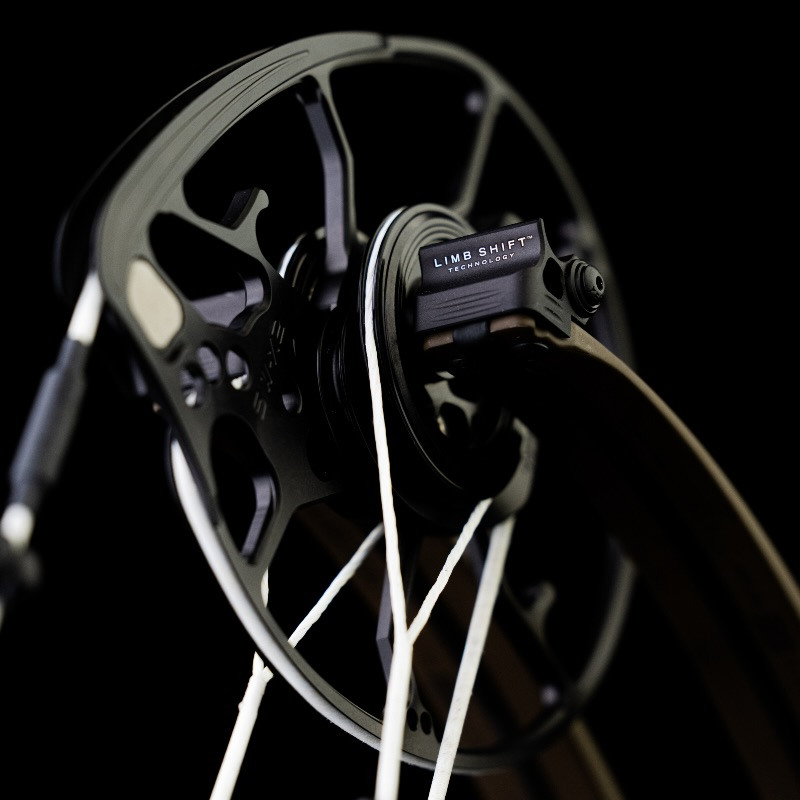
New bows are also easier to tune — and keep in tune — thanks to new technology. One great example is the adjustable limb-cam alignment system. Instead of having to press the bow and realign the cam using different size spacers to move it left or right, many of today’s high-end bows come with cam-alignment systems built right into the limb channel or limb pocket. Simply turn a few screws and you can quickly resolve poor arrow flight. Bowtech’s DeadLock Cam System, Elite’s S.E.T. Technology, Hoyt’s XTS Tuning System and Mathews’ Limb Shift Technology are all great examples of easy-to-use tuning systems.
Increasing Speed and Performance
When it comes to bowhunting success, the small things add up to a lot. This is where bow smoothness, speed, efficiency and tunability can all improve your shooting performance.
I’m a big believer in light-to-moderate draw weights. This doesn’t mean I don’t value a heavy-draw bow for maximum potential energy, but in most cases, archers tend to use bows too heavy for their physical build. This is a mistake that causes poor shooting form, loss of confidence, and potentially serious injury.
A better bet is to draw lighter and smoother. The big downside to this concept is less arrow speed and less penetrating performance on game. But with newer bows and technology, this can be minimized greatly. Due to major advancements in bow design, such as pre-loaded parallel limbs, energy-harnessing cam systems, and stiff-riser designs, today’s bows are highly efficient. This means you can draw less and still fire arrows with incredible power and speed.
Mathews Archery is well known for producing some of the most efficient bows on the planet. The company’s models from years ago cannot match the kinetic energy, dynamic efficiency (which is the percentage of stored energy that is transferred to the arrow), and average noise level outputs of their new flagship ARC Series — not by a long shot.
For example, when I compare my old Mathews Chill (333 fps IBO) or No-Cam HTX (326 fps IBO) to a Mathews Lift-X (348 fps IBO), there’s no comparison, really. For years I was happy shooting the Chill and No-Cam, taking some nice trophies with each of these setups. But the Lift-X 29.5 is much faster, smoother and produces way more dynamic efficiency that it simply leaves the older models in the dust. I can drop the draw weight by 8 to 10 pounds on the Lift-X (again, 348 fps IBO), and still maintain the same arrow speed as when using the older bows.
To illustrate this, let’s do a comparison between the older and newer model. My old No-Cam HTX is set at 27.5-inch draw length and 65 pounds pull weight. The bow fires 400-grain arrows at 268 fps, which generates 63.6 ft-lbs. of kinetic energy (KE) and .48 slug/fps of momentum.
However, my Lift X 29.5 — using the same draw/weight specs and arrow setup — shoots 290 fps and generates 74.7 ft-lbs. of KE and .51 slug/fps of momentum. When I reduce the draw weight on the Lift-X from 65 to 55 pounds, it drops the arrow speed to 270 fps, which now produces 64.6 ft-lbs. of KE and .48 slug/fps of momentum — essentially the same energy outputs as the No-Cam HTX but with the bow’s draw weight set 10 pounds less! As you can see, new bow technology counts for a lot in terms of arrow speed and energy.
Even today’s mid-grade bows produce impressive dynamic efficiency, usually above 85 percent, which is amazing. Bear’s Alaskan XT Pro is a great example. It’s priced at $659 yet it belts out arrows at an impressive 339 fps IBO speed. It comes with the smooth-drawing EKO cam system and a forgiving 6.25-inch brace height — a fast, powerful tool for more effective shooting and hunting.
Optimizing Bow Fit for Better Shooting Form
Finding the right bow at the right price is always the goal for the customer. This means it has to fit their body and pocketbook perfectly.
In terms of bow fit, the correct draw length and weight are critical here. Being “over-drawn and over-bowed” are two of the worst problems in archery because they wreck shooting form, accuracy and confidence.
During your sales pitch to the customer, have them draw several bows while sizing up their physical posture. Tune up the draw length precisely and keep the pull weight light. Many customers will want to use what’s familiar to them but insist on using the correct setup for their overall build.
Begin educating the client on the importance of using good shooting form. Be sure they can draw the bow smoothly without pointing to the sky. This is a hidden incentive of shopping for a new bow — to help the customer “re-set” their shooting form, so they can become consistently accurate and progress quickly in the sport.
The tough-guy-approach to draw length and draw weight should be addressed during the conversation. Give them honest feedback regarding new-bow technology, current speed ratings, and how this improves overall performance, negating the need for more bow poundage.
Sharing personal shooting and hunting experience are helpful, too. I know for me, I’ve found myself in several hunting scenarios where a lighter-pulling bow was a godsend, such as drawing on game in cold weather or from awkward shooting angles.
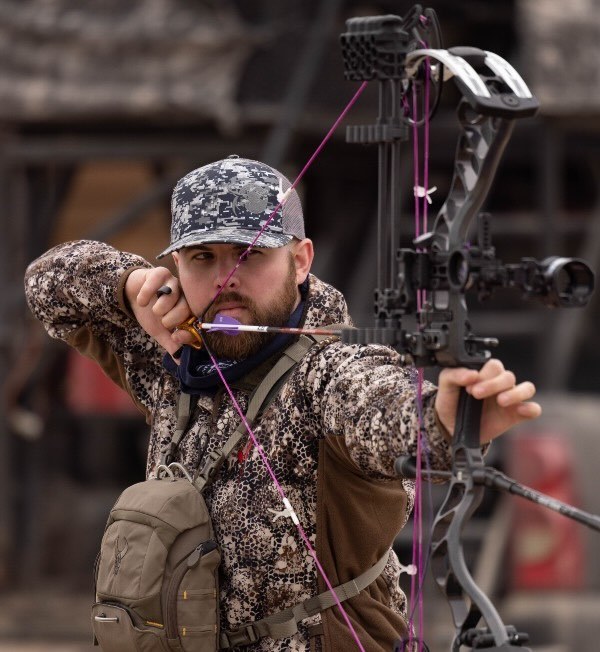
Be sure to describe — and even model — what good shooting form looks like. Explain that a good stance places their feet about a shoulder’s width apart. The bow-arm elbow should be in a low and locked position, and the draw-arm elbow should be in line or just above the arrow’s position. The archer’s release hand should be positioned positively against their jawbone, but not too firmly, which could cause collision with the bowstring and/or arrow vanes. While the archer is anchored at full draw, the bowstring should just barely touch the nose. These are good tips to point out.
Additionally, describe important details about the bow’s draw cycle, draw valley and draw wall. These tend to make or break good shooting. Fortunately, today’s bows come with refined cam systems that optimize these features.
For example, my four-year-old Hoyt Ventum Pro 30 bow was a great performer. But once I began shooting the newer Hoyt RX 8 model, equipped with the HBX cam, I was blown away. This cam offers a smoother draw, faster arrow speed, and an ultra-firm back wall — small attributes that did a lot to tighten my groups and improve my confidence, particularly at longer shooting distances.
Lastly, tell the customer that bows are not one size fits all. Shorter-axle bows (i.e., 32 inches or less for today’s extreme parallel-limb bows) typically fit shorter-draw archers best, due to string angle and powerstroke dimensions. The same goes for longer-axle bows (i.e., 33 inches-plus) and longer-draw archers. The proper string angle improves comfort and places the peep sight closer to the eye for better alignment and sight-pin visibility, both which will increase accuracy.
Once shooting form and bow sizes are addressed, you can move onto looking at different bow models and price points. Eventually, you’ll find the right bow for the customer that meets their every need.
Sidebar: Top-Tier Bowstrings Add Value
Bowstring materials have come a long way. Gone are the days of constant bowstring creep and unraveling of the peep sight. Today’s ultra-strong, durable and stretch-resistant fibers greatly improve a bow’s resistance to drift out of tune, despite lots of shooting and exposure to extreme weather.
Today’s high-end bows come with premium-quality bowstrings. For example, Mathews new ARC comes standard with MATCH bowstrings, the company’s most advanced bowstring system ever. The bowstring and harnesses are made from a proprietary blend of low-wax BCY 452X fiber that promises rock-solid repeatability, while the center and end servings are precisely wrapped to eliminate any potential serving slip or separation. This keeps the strings performing smoothly, shot after shot. The cost of the MATCH strings alone are $199, but they come standard on all Mathews ARC and Lift Series bows — a great value.

Even today’s mid-grade bows come with “near custom quality” bowstrings, improving durability and consistency. For example, Elite’s Terrain is a top-notch mid-grade bow. It comes standard with custom-grade Winner’s Choice bowstrings. Hoyt’s new Enduro is another impressive mid-grade model that’s loaded with great technology, including Hoyt’s WireWRX bowstrings, HBX Cam, and Vital Point Grip.
Remember, top-tier after-market bowstrings cost anywhere from $150 to $200! So, bowstrings alone are a worthwhile incentive for justifying a new bow purchase. This is certainly something to mention to the customer during the shopping experience.