
Most everyone in the archery industry knows that crossbows are hot. And of course, the hottest states are those that have made crossbow use legal for all ages during regular archery seasons.
While such regulation changes have been occurring for more than a decade — and new laws are opening up more crossbow hunting use yearly — some shops continue to struggle with what crossbows might mean to their overall sales, and more specifically, how they might impact their steady vertical bow sales.
Another question: How should a pro shop approach stocking crossbows and their accessories to make the most of this growing segment? The truth is, those are all valid concerns for pro shops that have built their businesses and have focused almost entirely on vertical bow sales.
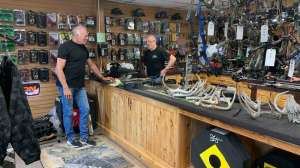
To get the scoop on the reality of the situation in a mature and thriving crossbow market, I spoke with two veteran Wisconsin-based pro shops that have not only embraced this complex hunting weapon, but also figured out ways to maximize sales and even extend the crossbow selling season — which is very different than for vertical bows.
Wisconsin legalized crossbows for use during the regular archery season way back in 2013, while its neighbor to the west, Minnesota, did the same only recently, in 2023. As many know, some more-recent changes include Maine in 2024 officially including crossbows in its definition of archery equipment. Also in 2024, Rhode Island aligned the state’s archery deer season with its fall turkey season, allowing crossbows to be used in both to alleviate confusion. And in August 2025, New York adopted a new law permitting the use of crossbows for hunting big game in any areas where longbows and compound bows are legal. So the winds of change continue to blow.
The numbers in Wisconsin show just how big an impact crossbows can make on a state’s archery season. In 2017, just 4 years after their across-the-board legalization, Wisconsin crossbow users killed more deer than those using vertical bows — for the first time in state history. And that trend continues. According to figures posted by the Wisconsin DNR on Jan. 9, 2024, the 2023 Wisconsin crossbow deer harvest was 53,954, versus the state’s 2023 vertical bow harvest of 35,306.
The Peak Sales Season
So Wisconsin hunters have had no trouble adopting crossbows, but what does that mean for the peak sales season in archery shops? I received almost identical answers from Dan Ellyson, owner and general manager at A-1 Archery in Hudson, and Will Moulton, manager of Mouldy’s Archery in Chippewa Falls, which is in its 39th year. These two veteran shops sell and service eye-popping numbers of crossbows. And they know to prepare to move crossbows much later than vertical bows.
“For our shop with crossbows, I would say you almost break it into half a year,” Ellyson said. “The first half of the year you’re just not going to sell crossbows. They’re not turnkey; they’re not like a vertical bow. So people wait longer to purchase them. But after that August 1 timeframe, until about the end of October, our crossbow sales are very strong. During the last half of the year, crossbows will be 50 percent of our bow sales.
“The first year a state goes crossbow legal during archery season, sales are going to be a steady year-round deal, but after that, it’s really a half-the-year thing.”

How to Extend the Sales Season
Moulton agreed with Ellyson’s assessment of crossbows mostly having a late-summer into fall sales peak. But his shop has used that knowledge to be more pro-active in its advertising, running specials that will get crossbow hunters into Mouldy’s Archery much earlier in the year.
“I think what we’ve seen is since crossbows were legalized here, crossbow unit sales have surpassed vertical bows virtually every year,” Moulton said. “Typically we’ll sell 3 to 5 percent more crossbows per year than vertical bows. “I always look at September 1 as the time when people are most interested in crossbows, but our crossbow sales start ramping up in July, because we run some early specials with advertising starting in June. Mostly because of that we sell crossbows really well in July and August, but our boom starts in mid September and runs right into December. The last two weeks of October and first two weeks of November, the crossbows are flying out of here.”
Advertising Is the Key
Local advertising is key for Moulton’s crossbow sales season-extending approach, and his most-effective tool is a direct-mail “mini-newspaper,” which for 2025 totaled an impressive 18 pages.
“We specifically target crossbow hunters in some of our advertising, with special offers if they get it done early,” Moulton said. “Our most effective is direct mail, and we couple that with email blasts, social media, Instagram, and that starts the first week of June through about the first week of July.
“I think a lot of people are surprised that we still do direct-mail pieces; it’s not inexpensive, but we’ve found it’s the most effective. We track how much business it brings in from year to year, and we do some things in our mini-newspaper that we can track, like a coupon. This year we mailed out 25,000 mini-newspapers, and we get people coming in for months after carrying those newspapers. I just don’t see that kind of response with emails.
“Our mini-newspaper is in a hunting magazine/newspaper format, and we print it through a local newspaper company. I’m not sure of the exact total cost, but it’s north of $10K. It’s well worth the return, but there are avenues to alleviate some of that cost, including working with manufacturers. Some will allot you advertising dollars based on your recent spending.
“I think the key to advertising for archery shops is specifically targeting your customers. We took a chance on a local email campaign last year that cost a lot of money. It went out to 30,000 emails, and the salesman said if it doesn’t get the desired response then they will resend it for free. Well, they ended up sending it out three times — and we didn’t get one response. We spent $2,500, and it was like throwing money away. I’ve just learned over the years, target your customers. You’ve got to figure out how that works, so the money you’re spending is going to them.”
Which Crossbows to Stock?
It’s interesting to note that both A-1 and Mouldy’s, more than 70 miles apart, stock a similar inventory of crossbows. A-1 stocks Ravin, TenPoint and Excalibur, while Mouldy’s stocks Ravin, TenPoint and Wicked Ridge. It’s no coincidence that all are made in North America, as both shops have learned lessons about selling cheaper imported models.
“At A-1 we deal with crossbows made in North America exclusively,” Ellyson said. “In addition to TenPoint and Ravin, we like selling Excalibur; it’s a very good crossbow made in Canada. We don’t deal anymore with crossbows made overseas. The overseas product, when you need a part, they are not there. And it can take so much time to get them.”
“I like stuff made in the USA,” echoed Moulton. “If people come in looking for cheaper imported crossbows, I literally tell people that they sell those at the big box stores. I sleep better at night selling Ravin, TenPoint and Wicked Ridge, knowing I can quickly get replacement parts and pieces, and take care of my customers. It’s so important to be able to pick up the phone and call people and get help when you need it.
“One thing I really like about TenPoint is its Wicked Ridge line, which competes very well price-wise against cheap imports, with a lot more quality.”

What About Accessories?
Recently I interviewed a veteran shop owner in Minnesota, which had just legalized crossbows for use by all during its regular archery season in fall of 2023. He was concerned about crossbows taking over a good portion of his bow sales, primarily because of his perception that he could be losing out on sales for all the high-margin accessories for compounds — sights, rests, quivers, stabilizers, etc. The word from our veteran Wisconsin dealers? There’s no need to worry about lost sales vs. vertical bows, and for several reasons.
“I think that loss of those extracurricular [vertical bow] products, sight, rest, quiver, release, I think there is an offset there, with the maintenance schedule that you need to get beyond with a crossbow,” Ellyson said. “Most crossbows need new strings every 2-3 years. When I sell somebody a midrange compound for $600, and accessories that might bring the total package to $900, I may never see that compound again; maybe once in 10 years.
“But if I sell them a midrange crossbow, then I’m selling them a new string two or three times in 10 years. And I will far exceed the dollars a dealer would make on a compound bow package.”
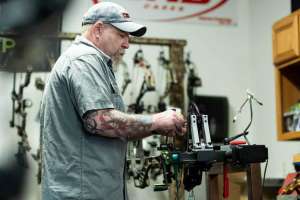
Ellyson said he likes to use factory replacement strings on relatively new crossbows, but after that, he prefers to sell his customers aftermarket strings made by GAS or Vapor Trail. Ellyson knows what works best because his shop replaces strings on more than 600 crossbows each year.
“For the most part, crossbows require a three- or five-piece string set,” he said. “And we’re looking in that $200 to $250 range. I would argue that a compound is easier to work on than a crossbow; we’re getting pretty proficient at it, but there are still timing issues. Installing strings on a crossbow can be a little more time consuming. The difference is, you're not tying in a drop-away rest cord, a peep, a kisser button, or string silencers.
“As a crossbow gets a little older, I like to use GAS or Vapor Trail strings because I think they build a little bit better string. And you can’t rely on a crossbow manufacturer for delivery on strings and cables during peak crossbow sales season. It can come down to who can deliver, and is it a good string? When it’s going to be loaded with 200 pounds on it, problems can arise. You like to deal with companies that stand behind their products.
“In the end, there is money to be made for the dealer servicing crossbows, and the biggest misconception with new crossbow owners is they say, ‘I shoot it only five times a year.’ When that bow is cocked, all the cables are taking on that poundage. If you hunt a lot but don't shoot a lot, you still are wearing out those strings and cables. I believe there is some replacement schedule calculation out there — I believe Ravin says 200 shots or 2 years. But if you have a customer who hunts 200 hours a year, that’s like shooting the bow 200 times. If somebody hunts that much and the bow is cocked that long, that bow more than likely needs new strings and cables every year.”
Show You’re the Expert
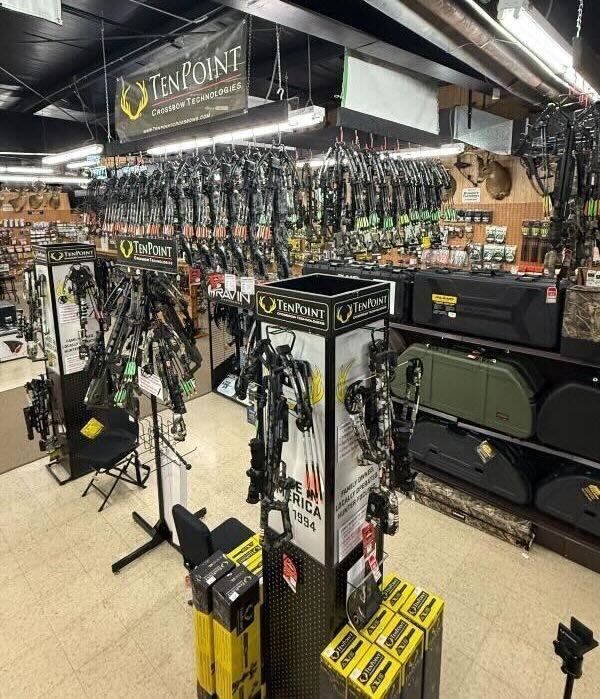
Moulton says there is no doubt about his shop’s focus as customers enter his doors; one side of the store is devoted to vertical bows and the other to crossbows. And they get equal billing.
“We have a very big crossbow selection up front,” he said. “Customers know immediately we stock a lot of crossbows, and we’ll display 60 to 80, with a very big inventory in back. And we will assemble them and sight all of them in at 20 yards so they are ready to go.
“I can’t sight-in a compound for somebody, but we shoot every single crossbow before the customer even touches it. That makes a big difference for us, and then we can spend a fair amount of time with each customer. We go through operation, maintenance, safety, and we let them shoot it in the store. All of my employees are trained on crossbows, and all of us can sell them.
“I think it’s important to cater to crossbow hunters. We have 24 shooting lanes out to 30 yards, and eight lanes are crossbow specific. I have three tables over there for using crossbows. I have crossbow targets, and they have a bench. We want to make sure everybody is comfortable. I think it’s important to cater to both vertical bows and crossbows, and when you have that knowledge, they really appreciate that you know what you’re talking about. Selling them the right arrows, the right targets, bringing up the safety issues. My staff loves selling crossbows because you can hand someone a crossbow, and within a few shots they feel like they’re the best shot in the world.”
Ellyson shares Moulton’s opinion. “At A-1 we display crossbows so people can handle them,” Ellyson said. “So have your display models out and available, and let customers test-shoot them — have at least a little range area ready. We partner with SpyderWeb targets, and they are two-finger removal with crossbows shooting up to 500 feet per second. Layered foam targets are just not good for crossbows.”

Final Thoughts
“Other than that, to make the most of crossbow sales, be sure to have an assortment of everything a crossbow hunter might want,” Ellyson said. “Slings, string lubrication, cases, targets, and have a good selection of crossbow-specific broadheads. And have them in a section that’s labeled for crossbows to prevent any confusion. Rage and the NAP Killzone do a good job of building and labeling crossbow-specific heads.”
Moulton said his shop does very well with crossbow-specific Rage, Grim Reaper and Swhacker mechanical heads. He said, “Very few new crossbows let you get away with using fixed-blade heads, because the speeds have gotten so crazy fast. The open-on-impact crossbow broadhead market is massive. It’s nice for customers to be able to sight-in with a bag target and field points, then screw on mechanical broadheads — that weigh and fly the same — and go hunting.”
“And lastly, remember that a lot of people who shoot crossbows are older people,” Ellyson said. “When you hit 60, 65, 70 years old, you might have some health issues but don't want to give up archery. That’s what crossbows were originally built for, but you have to be patient with this age group. You have to make sure they know how to operate their crossbow and the reasons behind it. Every one of my staff can sell a crossbow and teach customers how to work it properly, and that helps a lot.”
Sidebar: A Better Demo Policy
Like most archery shop managers, both Moulton and Ellyson allow customers to test-drive both vertical bows and crossbows in their shops. But Moulton has recently revamped his demo policy, for the better. His new policy centers on a simple coupon that has done wonders for his bottom line with greatly increased bow sales, and has also greatly reduced the staff work required to prep bows for demo for those with no intention of purchasing.
Some backstory: In the not-too-distant past, Moulton noticed a serious uptick in people wanting to demo bows at his shop. He noticed a huge percentage of those people would leave without a purchase, then return later with bows purchased on Amazon, or from box stores. Moulton also noticed another segment of test-drivers who would show up, maybe in a group of two or three or more, and run through several demos that would also result in no purchases. It didn’t take long to realize these groups might be out for, say, a day of golf, then decide to head to a pro shop to kill some time, and have some fun shooting bows. No purchase was ever considered.
The answer to Moulton’s dilemma came after a discussion with fellow pro shop owner John Schaffer, who runs Schaffer Performance Archery based in Minnesota. After hearing about Schaffer’s similar program, Moulton began requiring people wanting to demo bows to purchase a $20 “demo coupon” that allows them to test-drive up to three vertical bows or crossbows.
Now, $20 to demo three bows might at first glance seem a little steep. However, at the bottom of Moulton’s coupon it clearly states that if the customer purchases a new bow at his shop within 30 days, he will refund that coupon purchase, chopping the $20 off the bow purchase price. In addition, the shop has a rebate policy for certain levels of spending: Spend from $500 to $999 and get $25 off, $1,000 to $2,000 gets you $50 off, and spending over $2,000 will get you a $75 rebate.
“We’ve had that rebate program in place for many years, but when you suddenly combine it with the new demo coupon discount, people get excited about those discounts, and we ring up a lot of sales,” Moulton said.